Core Rules
Ability Scores
Characters have four Ability Scores
- Strength (STR) – melee force, lifting, breaking, grappling
- Agility (AGI) – defense, balance, stealth, climbing, swimming, fleeing
- Presence (PRE) – perception, aiming ranged attacks, charm, deception, ritual use
- Toughness (TGH) – endurance, resisting poison/disease, surviving harm
Ability Score Generation
- Each Ability Score begins at 0.
- You have 2 points to distribute among your Ability Scores.
- You may gain up to 2 additional points by reducing other Ability Scores on a 1:1 basis.
- No Ability Score may be increased above +2 during this step.
Your Class may provide additional Ability Score adjustments.
Ability Tests
When you try to do something that might fail, your success or failure is determined by an Ability Test. Roll 1d20 and add your relevant Ability Score. If you meet or exceed the Difficulty Rating (DR), you succeed, otherwise you fail.
Difficulty Ratings
| DR | Difficulty | Notes |
|---|---|---|
| 6 | easy | |
| 8 | routine | |
| 10 | pretty easy | |
| 12 | normal | most violence tests |
| 14 | difficult | training helps, a determined amateur might pull it off |
| 16 | really hard | real training needed |
| 18 | should not be possible | impossible without training |
Professions
Most people have a job of some sort where you learn to do things others aren’t so good at. This is your Profession.
A Profession matters when you attempt specialized work—tasks where “just trying” gets people hurt, ruins evidence, or simply doesn’t work (medicine, safecracking, wiretaps, forensics, demolition, serious mechanical repair, and similar). The GM decides what counts as specialized based on context.
Profession Lanes
When you choose your Profession, also choose its lane:
- Broad lane — can apply multiple times per scene
- Narrow lane — should apply about once a scene
- Surgical lane — should apply once a session
Picking Your Lane:
- If you find your Profession applies more than once a session, it isn’t Surgical.
- If you find it applies more than once a scene, it isn’t Narrow.
- Make your best guess at character creation. If it’s clearly the wrong fit in play, adjust the lane between sessions.
In Your Lane
When you are working in your lane, you are RELIABLE, any d20 result of 2–11 is treated as a 12.
-
Lane bonus: reduce the DR by
- 2 (Broad)
- 4 (Narrow)
- 6 (Surgical)
-
Professions never apply to violence tests (attacking, defending, initiative, or any roll made to harm or avoid harm).
Critical Success
A natural 20 on your Ability Test is a Critical Success. The result of your Critical Success depends on your action. If you are:
- Attacking: Deal double damage and reduce your target’s armor rating by one step.
- Defending: Take an immediate, free Attack against the target.
- Something Else: If it’s not impossible, you succeed spectacularly and gain a point of Luck.
Fumbles
A natural 1 on your Ability Test is a Fumble. The result of your Fumble depends on your action. If you are:
- Attacking: Your weapon breaks or is dropped or thrown at the GM’s discretion.
- Defending: You take double damage and your armor is damaged, reducing its armor rating by 1 step.
- Something Else: You fail spectacularly. If it’s possible to hurt yourself, you hurt yourself, suffering 1d6 damage. If you can crash, you crash. If you can break what you’re holding, you break it.
Skills
Skills represent broad categories of action. Most people can try most things. Skills tell you what you’re practiced at.
- When you make an Ability Test, add your relevant Ability Score and any Skill bonus.
Skill Ranks
- Untrained: +0
- Trained: +1
- Expert: +2
Advantage
- Some abilities (from your Class, Tags, or Profession) grant Advantage.
- When you have Advantage, roll 2d20 and take the higher result, then add all modifiers as normal.
Core Skills
- FIGHT (STR) — melee attacks, grapples, brawling, holds
- FORCE (STR) — forced entry, lifting/carrying, prying, breaking restraints, hauling bodies
- MOVE (AGI) — sneak, climb, swim, chase, dodge, escape, get to cover (includes routine driving)
- SHOOT (PRE) — firearms, throwing, ranged pressure
- NOTICE (PRE) — spot hidden, tails, ambush cues, surveillance tells
- TALK (PRE) — charm, lie, negotiate, intimidate, command a room
- GRIT (TGH) — physical toughness: pain, exhaustion, exposure, poison/disease, staying conscious
- NERVE (TGH) — mental toughness: fear, Freeze, horror, shock, keeping it together
Professions
Skills are broad. Professions are training.
- A Profession covers specialized work where “just trying” gets people hurt, ruins evidence, or simply doesn’t work.
- The GM decides what counts as specialized based on context.
Examples of specialized actions:
- Stabilizing the dying, injections, sutures, controlled drugs
- Safecracking, lock impressioning, bypassing secured locks
- Wiretaps, signal tracing, radio repair under pressure
- Engine repair/sabotage that won’t be obvious, rewiring, demolition work
- Forensics processing, chemical analysis, contamination work
Untrained Specialized Work
- Attempting specialized work without the relevant Profession is harder. The GM sets the DR:
- DR14 if a determined amateur might pull it off
- DR16 if it takes real training
- DR18 if it should not be possible
Trained Specialized Work
- With the relevant Profession, specialized work is handled as normal:
- Use the most relevant Ability (and any relevant Skill).
- The DR is whatever the situation calls for (typically DR12).
- You roll with Advantage when your Profession clearly applies.
Hit Points
Starting Hit Points: 5 + your TGH (minimum 1)
Your Class may provide additional Hit Point adjustments.
Damage
When you are hit by an Attack or harmed in some way, you take damage. That damage may be reduced by armor or other abilities. Whatevder damage remains, after any reduction, is subtracted from your Hit Points.
If your Hit Points become 0, you are Broken. Broken characters are unconscious. When you become Broken, roll a TGH Test. Particularly grievous wounds can increase the DR of this test.
| 1d20 + TGH | Result |
|---|---|
| Fumble | You are dead. |
| 1 | You will die in 1d4 rounds unless treated with a DR 18 test. A failure kills you. |
| 2-6 | You will die in 1d2 hours unless treated with a DR 16 test. A Fumble kills you. |
| 7-9 | You awaken after 1d12 hours and suffer a long-term injury (see Scarred/Maimed below). |
| 10-13 | You awaken in 1d4 hours with 1 Hit Point. |
| 14+ | You awaken in 1d4 rounds with 1 Hit Point. |
| Critical Success | You awaken immediately with 1d4 Hit Points. |
If you take additional damage while Broken, make an immediate TGH Test but subtract the damage from your result.
Hit Points cannot become negative.
Recovering
You regain Hit Points by resting.
- Take a Break: When you Take a Break, you get 1d4 Hit Points back. You might have a drink, eat lunch, catch your breath, or whatever. It doesn’t matter what you do, only that you have a few moments of calm to gather your wits. You can Take a Break once a day.
- Rest: A good night’s rest gives you back 1d6 Hit Points.
You can’t regain Hit Points if you don’t have access to food and water.
Scarred/Maimed (1d20)
| d20 | Injury | Effect |
|---|---|---|
| 1 | Crushed Skull | –2 Presence |
| 2 | Blinded Eye | –1 Presence |
| 3 | Shattered Jaw | –1 Presence |
| 4 | Nerve Damage | –1 Agility |
| 5 | Ruined Knee | –1 Agility |
| 6 | Broken Foot | –1 Agility |
| 7 | Mangled Hand | –1 Strength |
| 8 | Torn Shoulder | –1 Strength |
| 9 | Cracked Spine | –1 Strength |
| 10 | Punctured Lung | –1 Toughness |
| 11 | Internal Bleeding | –1 Toughness |
| 12 | Chronic Infection | –1 Toughness |
| 13 | Burn Scars | –1 Presence |
| 14 | Tremors | –1 Agility |
| 15 | Muscle Atrophy | –1 Strength |
| 16 | Weak Heart | –1 Toughness |
| 17 | Nightmares | –1 Presence |
| 18 | Slowed Reflexes | –1 Agility |
| 19 | Frail Frame | –1 Toughness |
| 20 | Close Call | No effect |
Luck
Everyone catches a break every now and then. Your class determines your Luck. You can spend a Luck point to:
- Deal maximum damage with an attack
- Reroll a die (yours or someone else’s)
- Lower damage you take by 1d6
- Neutralize a Critical Success or Fumble
- Lower a test’s DR by 4
When you use up your Luck, you get it back after resting at least 6 hours.
Leveling Up
You level up when your GM tells you to level up. When you do:
- Roll 6d10. If the result is equal to or greater than your current Hit Points, increase your Hit Points by 1d6.
- Choose one:
- Add 1 to an Ability Score of your choice (to a maximum of +6)
- Select an additional Power from your class Power table
- Permanently add 1 Luck (to a maximum of 6)
Combat
When things get violent, a few more rules matter.
Initiative
Roll an AGI Test. Take turns in order from highest to lowest. Ties go to the players.
Attacks
Monsters do not roll in combat. Players roll to attack and defend against enemy attacks. Many factors can impact the Difficulty Rating of an attack, but a typical attack is resolved as:
- Melee: DR 12 STR Test
- Ranged: DR 12 PRE
- Defense: DR 12 AGI
Freeze
When confronted with extreme danger, violence, or the unknown, you may Freeze. Make a PRE or TGH Test (GM’s call). If you succeed, you push through the fear, if you fail, you Freeze. When you do, you lose your next meaningful action. You can drop prone, run away, babble, stare in shock, or something similar but you cannot take any action that meaningfully improves your situation.
Classes
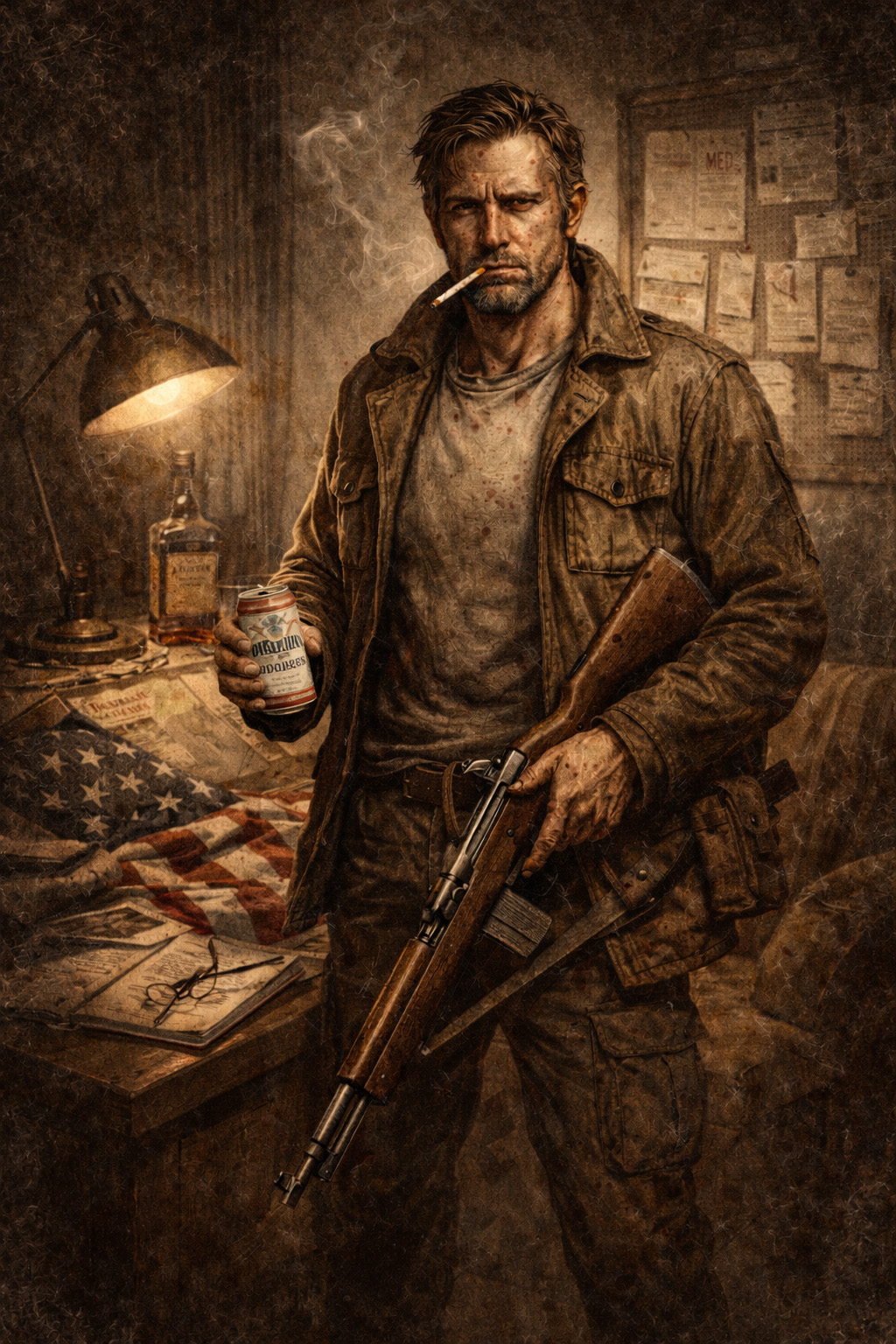
Battle-Scarred GI
War-made and hard to scare, you keep moving when others stop.
Grease-Pit Savant
You keep things going long after they should have stopped.
Ink-Stained Snoop
A tired investigator with ink on your hands, you are determined to find the truth no matter where it hides.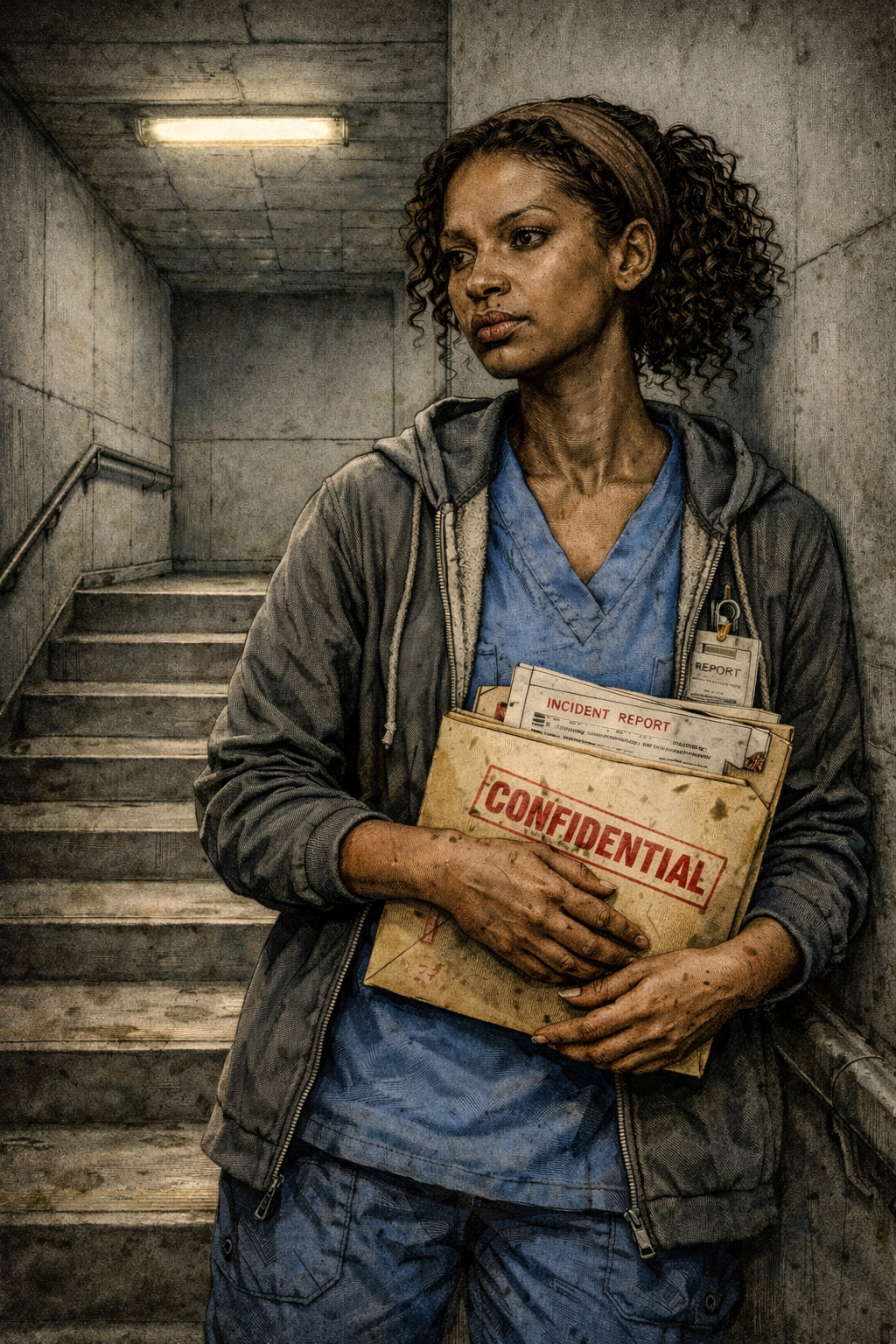
Night-Shift Nurse
You work when nobody is watching and see where the bodies are hidden.
Suit With No Name
You carry authority like a weapon. Whether it’s real, borrowed, or about to burn depends on the day.Black File Protocol is an independent production by Embers Design Studios and is not affiliated with Stockholm Kartell. It is published under the CY_BORG Third Party License.
CY_BORG IS ©2022 STOCKHOLM KARTELL.